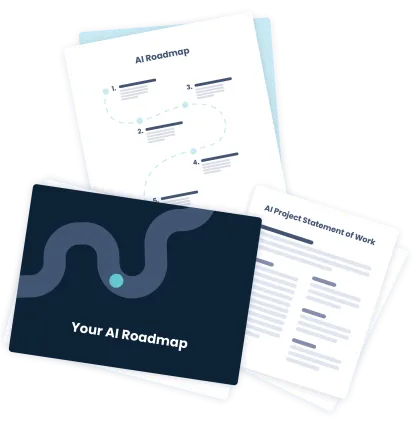
Automation Roadmap
Findings & documentation from all Process Workshops




Automation Mining
Automation Mining identifies the highest-impact opportunities across your core processes, aligns your team on priorities, and creates a clear path to execution.
Findings & documentation from all Process Workshops

ROI analysis for each opportunity

Statement of work for each opportunity

Teammate AI helped Sante Realty Investments automate commercial real estate property discovery and deal…
Read the Case Study
Teammate AI automated VisionSpark’s resume-management workflow, eliminating approximately 40 hours of repetitive work each…
Read the Case Study
Teammate AI automated receipt review and financial-data analysis for J.P. Mohler. The solution enables…
Read the Case Study
Bear’s Benefits Reconciliation tool automatically cross-references insurance statements with employee and payroll data. The…
Read the Case StudyBear’s email-sentiment tool analyzes hundreds or thousands of customer-service messages that would be impractical…
Read the Case Study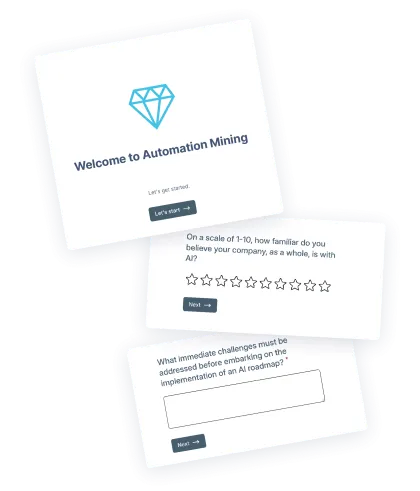


Step 1
We’ll set the stage for our time weeks together.
We’ll introduce AI with special emphasis placed on the importance of aligning AI with your Capabilities.
We’ll discuss key findings from the prework.
Step 2
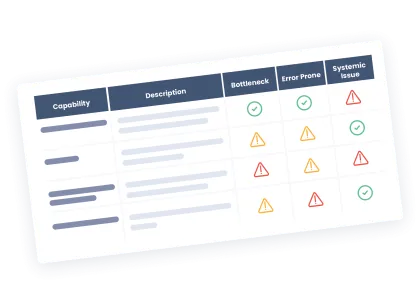
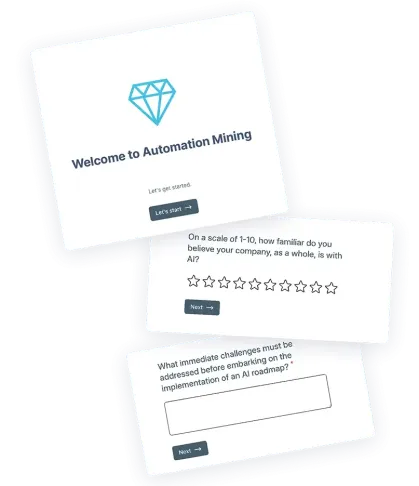
We’ll use prework to validate whether perceived issues are individual pain points or shared, process-level problems—the focus of Automation Mining. We prioritize systemic bottlenecks, high-effort workflows, and error-prone processes, then align on which opportunities matter most and how they break into the right set of workshops, owners, and participants.
Step 3
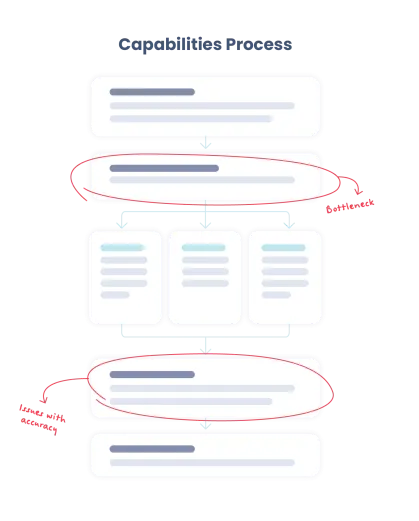
We’ll facilitate a detailed evaluation of how your processes work today and the future state you aspire to achieve. We will gain insights into your strengths, understand supporting processes and technology, identify opportunities for AI integration, and plan for necessary investments.
Step 4
We’ll take everything back up until this point to compile all AI opportunities that we’ll present to you for feedback. We’ll gather your feedback and assess priorities to each initiative based on the following criteria:
1. Strategic alignment
2. Cost Reduction / Revenue Expansion
3. Risk & Complexity
4. Operational Effectiveness / Alleviation of Pain
5. Stakeholder impact
6. Time to Value
7. Market Demand
8. Innovation / Competitive Advantage
9. Cost-Benefit
We’ll also do a Change Management exercise to determine and build the Change Management work plan.
Step 5
We’ll narrow many opportunities to the 1–4 with the highest enterprise impact, determine whether additional workshops are needed, and concentrate effort on the highest bang-for-buck initiatives.
Step 6
We’ll button everything up so your organization has a complete AI roadmap, the priorities, the change management plan, and everything you need as you head into implementation.

Teammate AI's approach toward AI is spot on. AI is a tool for humans to enable better teamwork and build better client experiences.
Co-Founder of Strategic Coach
On our discovery call, we’ll discuss your future vision, what’s getting in your way, and see if AI can help you achieve that vision.
Most companies know they need AI. They just do not know where to start. Automation Mining exists for companies that want clarity before they build. It is a structured, six-week…
Read MoreMany companies believe they need AI. Fewer are actually ready for it. Before building anything, an organization should be able to answer five questions. 1. Do You Have Stable Core…
Read MoreAI roadmaps fail when organizations begin with tools, automate isolated tasks, skip ROI modeling and underestimate employee adoption. Learn what an execution-ready roadmap must include to turn a list of…
Read MoreAutomation Mining is a structured AI and automation discovery program that identifies where automation will create the greatest business impact. It focuses on process-level inefficiencies, bottlenecks, and high-effort workflows rather than isolated tasks.
It’s designed for organizations that want to leverage AI or automation but need clarity on where to start, what to prioritize, and how to build a practical roadmap.
Automation Mining uses structured process workshops to identify and prioritize opportunities. It produces an automation roadmap, ROI scorecards, and an implementation plan your team can act on.
Automation Mining helps businesses address:
The program typically includes:
Deliverables often include:
Most engagements run approximately 4–6 weeks depending on scope, availability of stakeholders, and workshop cadence.
No deep technical work is required. Stakeholders complete light prework (activity logs, technologies, pain points) to accelerate workshops.
Opportunities are scored against criteria such as:
Organizations can proceed into implementation, Proofs of Concept (POCs), pilot projects, or phased development using the finalized roadmap.
Yes. The documentation and roadmap are designed to support either Teammate AI implementation or handoff to internal/external teams.
Common categories include:
On our discovery call, we’ll discuss your future vision, what’s getting in your way, and see if AI can help you achieve that vision.
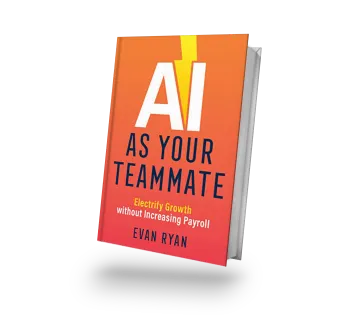
“A great starting place for entrepreneurs.” Peter Diamandis, XPrize Founder
Learn More
See how other companies are using AI to increase capacity and drive efficiency.
Learn MoreInsights on AI strategy, implementation, and what it actually takes to drive adoption.
Learn More